TL;DR:
To manage Making Tax Digital (MTD) compliance in 2025, UK businesses and accounting firms should adopt MTD-compatible software (like Xero, QuickBooks), implement robust digital record-keeping, standardize processes, and continuously train teams. Leveraging automation and AI can enhance efficiency and accuracy, while strategic outsourcing to partners like Acenteus CCA offers expert support, especially for MTD for VAT and the phased rollout of MTD for Income Tax Self Assessment (ITSA) from April 2026.
Understanding MTD Compliance in 2025
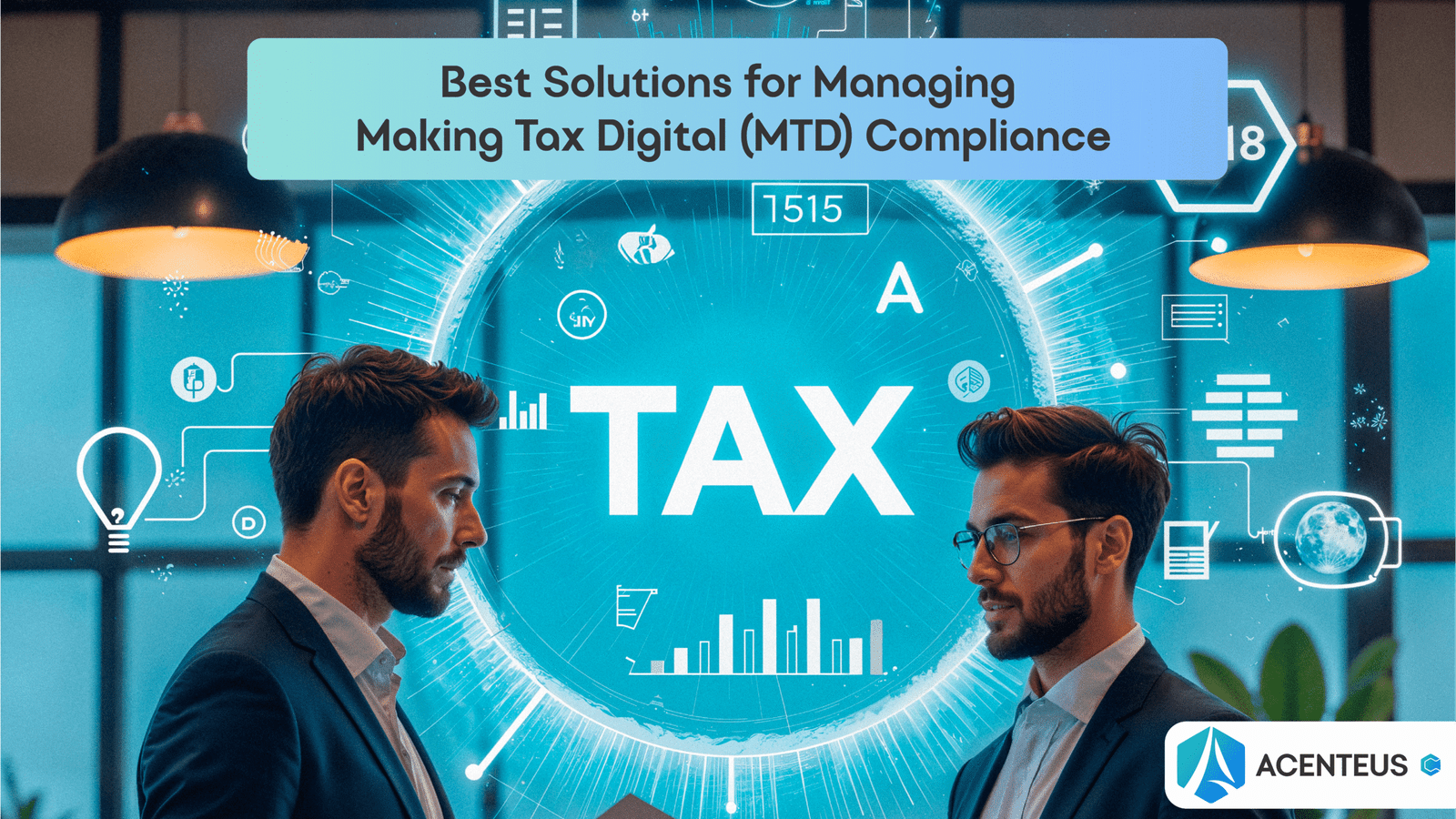
Managing Making Tax Digital (MTD) compliance in 2025 requires a clear understanding of the evolving landscape, especially for UK accountancy firms and small to medium businesses. We have a complete 2025 guide to MTD compliance that details specific deadlines and rules, but here, we will focus on practical, day to day management solutions.
The MTD initiative, driven by HMRC, aims to modernise the tax system by requiring businesses and individuals to keep digital records and submit tax updates digitally. This shift towards digital tax reporting is not just about compliance; it is a fundamental change in how tax information is managed and submitted. By 2025, the focus intensifies on MTD for VAT and the phased rollout of MTD for Income Tax Self Assessment (ITSA), impacting millions of taxpayers.
For accounting firms, MTD represents both a challenge and a significant opportunity. A 2025 survey highlighted that 81.7% of accountants view MTD as their top challenge, yet 79% also see it as their biggest opportunity, according to Accountancy Age. This dual perspective underscores the need for robust digital technology solutions and strategic planning to transform compliance into a business enabler.
The increasing complexity of tax compliance, with total UK tax compliance costs reaching £20 billion, as reported by Branagans, makes efficient MTD management more critical than ever. Businesses and their advisors must embrace digital technology best practices to navigate these regulations effectively and avoid penalties.
Key aspects of MTD compliance in 2025 include mandatory digital record keeping, quarterly digital updates, and the use of MTD compatible software. These requirements apply to various entities, including VAT registered businesses, self employed individuals, and landlords. Understanding these core elements is the first step towards developing a successful MTD strategy.
What are the core requirements of MTD in 2025?
- Digital Record Keeping: All relevant business transactions must be recorded and stored digitally. This includes sales, purchases, and expenses.
- MTD Compatible Software: Businesses must use software that can connect directly to HMRC’s systems to submit tax updates.
- Quarterly Updates: For MTD for Income Tax, businesses and individuals will need to submit quarterly summaries of their income and expenses to HMRC.
- End of Period Statement (EOPS): An annual EOPS will be required to finalise the tax year’s figures.
- Final Declaration: A final declaration will be submitted, similar to the current Self Assessment tax return, but incorporating the digital updates.
What Software Options Work Best for MTD?
Choosing the right MTD compatible software is perhaps the most critical decision for effective compliance in 2025. The best solutions integrate seamlessly with HMRC, offer robust digital record keeping capabilities, and simplify quarterly reporting.
There is a wide array of MTD software available, ranging from comprehensive accounting platforms to bridging software solutions. For many businesses and accounting firms, cloud based solutions like Xero, QuickBooks, and FreeAgent are popular choices due to their user friendly interfaces and extensive features. These platforms not only facilitate MTD compliance but also offer broader benefits like automated bank feeds, invoicing, and financial reporting.
When selecting MTD software, consider factors such as ease of use, scalability, cost, and the level of support provided. It is also important to assess whether the software can handle your specific business needs, such as multiple income streams, property income, or complex VAT schemes. Patrick from an accounting firm noted at an ICAEW event, “We’ve decided we’re not doing any bridging software going forward. We’ve had to make that decision and that’s now determined how we’re going to deliver services to clients going forward.” This highlights a trend towards integrated solutions over bridging software.
Many accounting firms are also exploring leveraging Xero and QuickBooks integrations for efficiency, as these platforms often form the backbone of their digital accounting strategies. The goal is to streamline data flow from clients to the firm and then to HMRC, minimising manual intervention and potential errors.
The market for MTD compatible software is dynamic, with continuous innovation. As Boffix, an accounting firm, mentioned at the same ICAEW event, “There has never been a better time – we’ve never seen more innovation. I’ve been spending my time looking at all the offerings and seeing how AI’s made a huge impact on it.” This indicates that firms should regularly review their software choices to ensure they are utilising the most efficient and advanced digital technology solutions.
Comparison of MTD Software Approaches
Approach | Description | Pros | Cons | Best Suited For |
In house Software Only | Full accounting software (e.g., Xero, QuickBooks) used directly by the business. | Comprehensive features, real time data, full control. | Requires internal expertise, higher initial cost, ongoing training. | Businesses with dedicated finance teams, tech savvy owners. |
Hybrid Software + Spreadsheets | Using software for core transactions, bridging software for spreadsheet data. | Flexibility for existing spreadsheet users, lower initial software cost. | Risk of manual errors, less real time data, bridging software dependency. | Small businesses transitioning, those with complex legacy data. |
Fully Managed MTD Support | Outsourcing MTD compliance to a partner (e.g., Acenteus CCA). | Expert handling, reduced internal burden, access to advanced tools. | Less direct control over day to day data entry, reliance on partner. | Businesses lacking time/expertise, firms managing many clients. |
Free MTD Software | Basic software options, often with limited features. | No direct cost, suitable for very simple tax affairs. | Limited functionality, less support, potential for scalability issues. | Very small businesses or sole traders with minimal transactions. |
How to Implement Effective Digital Record Keeping?
Effective digital record keeping is the foundation of MTD compliance, ensuring that all financial transactions are accurately captured and stored in a digital format. This is not merely about scanning receipts; it is about establishing a systematic approach to managing financial data from its origin to its submission to HMRC.
The core principle is to eliminate manual data entry wherever possible. This can be achieved through various digital technology solutions, such as integrating bank accounts directly with accounting software, using receipt scanning apps, and automating invoice processing. The goal is to create a seamless flow of information that minimises human error and saves time.
For example, using cloud accounting software allows for automatic categorisation of transactions and reconciliation with bank statements. Many platforms also offer mobile apps that enable users to snap photos of receipts, which are then automatically uploaded and processed, ensuring that all expenses are digitally recorded as they occur. This proactive approach is a key digital technology best practice for MTD.
Implementing a robust digital record keeping strategy also involves establishing clear internal processes and ensuring staff are adequately trained. Even with the best software, human error can undermine compliance. Regular audits of digital records can help identify and rectify any inefficiencies or discrepancies, as recommended by Glasscubes.
The benefits extend beyond compliance. Efficient digital record keeping provides real time financial insights, improves cash flow management, and simplifies year end accounting. For accounting firms, guiding clients through this transition is crucial, as 73% of agents are actively supporting clients with digital record keeping, according to HMRC research.
Key Steps for Digital Record Keeping
- Choose MTD Compatible Software: Select a platform that supports digital record keeping and integrates with HMRC.
- Automate Data Capture: Use bank feeds, receipt scanning apps, and integrated payment systems to minimise manual entry.
- Standardise Processes: Develop clear guidelines for how transactions are recorded, categorised, and stored digitally.
- Regular Reconciliation: Periodically reconcile digital records with bank statements and other financial documents to ensure accuracy.
- Secure Storage: Ensure digital records are stored securely, with appropriate backups and access controls, compliant with data protection regulations.
Examples of Digital Record Keeping in Practice
- Sole Trader: Uses a mobile app to photograph all business receipts immediately after purchase. The app extracts data and uploads it to their cloud accounting software, automatically categorising expenses.
- Landlord: Integrates their property management software with their MTD compatible accounting software. Rent payments are automatically recorded, and expenses like repairs are captured via scanned invoices.
- Limited Company: Employs an expense management system that integrates with their accounting software. Employees submit expenses digitally, which are then approved and automatically posted to the ledger.
- Small Business: Uses a point of sale (POS) system that directly feeds sales data into their accounting software, eliminating manual sales entry.
How Can Accountants Standardise MTD Processes for Different Client Types?
Standardising MTD processes across diverse client portfolios is essential for accounting firms to efficiently manage compliance, reduce errors, and scale their services. This involves creating repeatable workflows that can be adapted to various business structures and their specific MTD requirements.
The first step is to segment clients based on their MTD obligations and business complexity. For instance, clients subject to MTD for VAT will have different needs than those preparing for MTD for Income Tax. Further segmentation can be based on turnover, number of transactions, and existing digital maturity. This allows firms to tailor their approach without reinventing the wheel for each client.
Developing standardised checklists and templates for onboarding, digital record keeping, and quarterly reporting can significantly streamline operations. These tools ensure consistency and help identify any missing information or potential compliance gaps early on. For example, a checklist for a new MTD for ITSA client might include verifying software compatibility, setting up bank feeds, and explaining quarterly submission deadlines.
Utilising a centralised practice management software or collaborative platform can further enhance standardisation. Platforms like Glasscubes have shown impressive results, with companies reporting a 40% increase in customer response rates and 288 hours saved in one tax season. These tools facilitate secure document sharing, task management, and client communication, all vital for a standardised MTD process.
Regular internal training sessions for staff on these standardised processes are also crucial. This ensures that all team members are proficient in the adopted digital technology solutions and can consistently apply the firm’s MTD best practices. By standardising, firms can improve efficiency, reduce the risk of penalties, and free up time for advisory services.
Steps to Standardise MTD Processes
- Client Segmentation: Categorise clients by MTD obligation (VAT, ITSA), business type (sole trader, limited company, landlord), and digital readiness.
- Develop Standardised Workflows: Create step by step processes for onboarding, data collection, software setup, and submission for each client segment.
- Utilise Templates and Checklists: Implement standardised templates for communication, data requests, and internal review checklists for submissions.
- Centralised Communication Platform: Use a secure client portal or collaboration tool to manage client interactions and document exchange.
- Automate Routine Tasks: Leverage software features for automated data imports, categorisation, and reconciliation to reduce manual effort.
Examples of Standardised Processes for Different Client Types
- MTD for VAT Client (Small Retailer):
- Onboarding: Software setup (Xero), bank feed connection, training on receipt scanning app.
- Quarterly Process: Automated data import, review of categorised transactions, VAT return generation, client approval via portal, submission.
- MTD for ITSA Client (Self Employed Consultant):
- Onboarding: Software setup (QuickBooks), explanation of quarterly income/expense tracking, guidance on separating business and personal finances.
- Quarterly Process: Client uploads bank statements/receipts, accountant reviews and categorises, generates quarterly summary, client approves, submission.
- MTD for ITSA Client (Landlord with Multiple Properties):
- Onboarding: Integration with property management software, setup of separate income/expense categories per property, explanation of property specific deductions.
- Quarterly Process: Automated rent income tracking, digital capture of repair/maintenance invoices, review of property specific profit/loss, submission.
Why is Training and Upskilling Your Team Crucial for MTD?
Investing in comprehensive training and upskilling for your team is not just beneficial; it is absolutely crucial for successful MTD compliance in 2025. The transition to digital tax reporting requires new skills, processes, and a fundamental shift in how financial data is managed.
Without adequate training, even the most advanced digital technology solutions can be underutilised or lead to errors. Staff need to be proficient in using MTD compatible software, understanding digital record keeping requirements, and navigating HMRC’s digital services. This includes both internal finance teams within businesses and the accounting professionals who advise them.
Training should cover not only the technical aspects of the software but also the underlying principles of MTD, including the importance of accurate and timely submissions, and the potential penalties for non compliance. This holistic approach ensures that team members understand the ‘why’ behind the new processes, fostering a greater sense of responsibility and attention to detail.
For accounting firms, upskilling also extends to client education. As agents are increasingly encouraging voluntary sign up for MTD, rising from 33% to 49% by July 2025, according to HMRC research, firms need to be equipped to educate their clients effectively. This might involve running workshops, creating user friendly guides, or providing one on one support to help clients adapt to digital record keeping.
The continuous evolution of digital technology trends means that training should be an ongoing process, not a one off event. Regular updates and refresher courses will ensure that teams stay abreast of the latest software features, HMRC guidance, and digital technology best practices. This proactive approach helps firms and businesses maintain compliance and leverage MTD as an opportunity for growth.
Key Areas for MTD Training
- MTD Software Proficiency: In depth training on chosen accounting software (Xero, QuickBooks, FreeAgent) for data entry, reconciliation, and reporting.
- Digital Record Keeping Principles: Understanding HMRC’s requirements for digital records, including acceptable formats and storage.
- HMRC Digital Services: Familiarity with the HMRC portal for MTD submissions, error correction, and accessing client tax accounts.
- Client Communication & Education: Training on how to explain MTD requirements to clients, assist with software setup, and troubleshoot common issues.
- Compliance & Penalties: Understanding the penalty regime for late submissions and payments, and how to avoid them.
Benefits of a Well Trained Team
- Reduced Errors: Proficient users make fewer mistakes in data entry and submission, leading to more accurate tax returns.
- Increased Efficiency: Trained staff can utilise software features more effectively, saving time on routine tasks.
- Improved Client Satisfaction: Knowledgeable accountants can provide better support and guidance to clients, enhancing trust and satisfaction.
- Better Compliance: A well trained team is more likely to meet deadlines and adhere to HMRC’s MTD requirements, avoiding penalties.
- Enhanced Advisory Capacity: By streamlining compliance tasks, trained staff can focus more on value added advisory services.
How Can Automation and AI Enhance MTD Compliance?
Automation and Artificial Intelligence (AI) are rapidly becoming indispensable tools for enhancing MTD compliance, moving beyond basic digital record keeping to intelligent data processing and error reduction. These digital technology trends offer significant opportunities for efficiency gains and improved accuracy.
Automation in MTD compliance primarily involves streamlining repetitive tasks, such as data entry, categorisation of transactions, and reconciliation. For example, integrating bank feeds with accounting software automatically imports transactions, while AI powered tools can learn to categorise these transactions based on past patterns, significantly reducing manual effort. This not only saves time but also minimises the risk of human error, a common cause of compliance issues.
AI’s role extends to more sophisticated functions, such as anomaly detection and predictive analytics. AI algorithms can flag unusual transactions or potential discrepancies in digital records that might indicate errors or even fraudulent activity, allowing for proactive correction before submission to HMRC. This proactive error detection is a critical strategy for how AI is transforming UK accounting firms.
For accounting firms, leveraging automation and AI means they can process client data faster and with greater accuracy, freeing up their teams to focus on higher value advisory services. As Boffix noted, “I’ve been spending my time looking at all the offerings and seeing how AI’s made a huge impact on it,” indicating a clear shift towards AI driven solutions in the accounting sector, as highlighted by ICAEW.
Automated reporting solutions, as discussed by Glasscubes, can further enhance compliance by ensuring that quarterly updates are generated consistently and accurately. This not only speeds up the submission process but also provides businesses with more timely insights into their financial performance, enabling better decision making.
Benefits of Automation and AI in MTD
- Increased Accuracy: AI driven categorisation and anomaly detection reduce human error in digital records.
- Time Savings: Automating data entry, reconciliation, and report generation frees up significant time for finance teams and accountants.
- Enhanced Compliance: Automated checks and streamlined processes ensure timely and accurate submissions to HMRC.
- Real Time Insights: Faster data processing provides up to date financial information for better business management.
- Cost Reduction: By improving efficiency and reducing errors, automation can lower overall compliance costs.
Examples of Automation and AI in Action
- Automated Bank Feeds: Transactions from business bank accounts are automatically imported into MTD software daily, eliminating manual entry.
- AI Powered Receipt Scanning: Software uses AI to extract data from scanned receipts and invoices, automatically categorising expenses and matching them to bank transactions.
- Intelligent Reconciliation: AI algorithms learn from past reconciliations to suggest matches between bank transactions and invoices, speeding up the process.
- Predictive Compliance Checks: AI tools analyse digital records to identify potential MTD compliance issues before quarterly submissions, such as missing data or incorrect categorisations.
- Automated Report Generation: MTD software automatically generates quarterly summary reports based on digital records, ready for review and submission.
When Does it Make Sense to Outsource MTD Tasks?
Deciding whether to outsource MTD tasks is a strategic decision for many UK businesses and accountancy firms, particularly as compliance demands grow. Outsourcing can be a highly effective digital technology strategy when internal resources are stretched, expertise is lacking, or the goal is to focus on core business activities.
For small to medium businesses, outsourcing MTD compliance can alleviate the burden of learning new software, understanding complex regulations, and dedicating valuable time to administrative tasks. This is especially true for businesses without a dedicated in house finance team or those whose owners prefer to concentrate on growth and operations. Outsourcing can provide access to expert knowledge and advanced digital technology solutions without the overhead of hiring and training internal staff.
For accountancy firms, outsourcing MTD tasks can be a game changer, particularly during peak periods or when managing a large volume of clients with varying MTD needs. It allows firms to scale their capacity without increasing headcount, ensuring that all clients receive timely and accurate MTD services. This approach aligns with discover how outsourcing can benefit accountants by providing flexible support.
Consider outsourcing if your team is struggling with the time commitment required for digital record keeping and quarterly updates, or if you are concerned about the accuracy of your submissions. The cost of MTD implementation was estimated at £500 million initially, with ongoing net costs around £200 million annually for MTD for Income Tax, according to Branagans, highlighting the significant investment involved.
Outsourcing partners, like Acenteus CCA, specialise in MTD compliance, offering structured, UK focused support. They can take over repeatable compliance work, such as digital record keeping, data processing, and quarterly submissions, while you retain control of client relationships and focus on advisory work. This is a practical solution for firms looking to scale your accounting practice during tax season and beyond.
Indicators for Considering MTD Outsourcing
- Lack of Internal Expertise: Your team lacks the specific knowledge or training in MTD regulations and compatible software.
- Time Constraints: MTD tasks are consuming too much valuable time that could be spent on core business activities or client advisory.
- High Volume of Transactions: Managing a large number of digital records and quarterly updates becomes overwhelming internally.
- Concerns about Accuracy: Worries about potential errors in digital record keeping or submissions leading to HMRC penalties.
- Desire for Scalability: Needing flexible capacity to handle fluctuating workloads, especially for accounting firms with growing client bases.
Benefits of Outsourcing MTD Compliance
- Access to Expertise: Leverage specialist knowledge in MTD regulations and digital technology solutions.
- Cost Efficiency: Potentially lower costs compared to hiring and training internal staff or investing in premium software.
- Time Savings: Free up internal resources to focus on strategic initiatives and client relationships.
- Improved Accuracy: Reduce errors through professional handling and robust internal controls of outsourcing partners.
- Enhanced Compliance: Ensure timely and accurate submissions, mitigating the risk of penalties.
MTD Compliance for Various Business Structures
MTD compliance requirements vary slightly depending on the business structure, necessitating tailored approaches for sole traders, landlords, and limited companies. Understanding these nuances is key to effective digital tax reporting.
For sole traders and self employed individuals, the primary focus is on MTD for Income Tax Self Assessment (ITSA). This means keeping digital records of all business income and expenses and submitting quarterly updates to HMRC. Many sole traders may initially rely on spreadsheets, but they will need to use MTD compatible software or bridging software to submit their updates. The challenge often lies in separating business and personal finances and consistently recording all transactions digitally.
Landlords with property income also fall under MTD for ITSA if their gross income from property and self employment exceeds the threshold. They need to digitally record all rental income and property related expenses. This can be complex for landlords with multiple properties or those who incur a variety of expenses, from maintenance to agent fees. Property management software that integrates with MTD accounting software can be particularly beneficial here.
Limited companies are currently primarily affected by MTD for VAT, if they are VAT registered. This requires them to keep digital VAT records and submit VAT returns using MTD compatible software. While MTD for ITSA does not currently apply to limited companies, they should still embrace digital record keeping as a best practice, as it streamlines their overall accounting and prepares them for any future expansion of MTD. The VAT registration threshold will lower from £90,000 to £30,000 from April 2027, bringing more businesses into MTD for VAT, as noted by Kletta.
Regardless of the business type, the underlying principles of MTD remain the same: digital record keeping and digital submissions. The best solutions involve selecting appropriate MTD software, establishing clear digital technology strategies, and ensuring consistent application of MTD best practices. For firms, offering tailored advice and support for each client type is crucial for successful compliance.
MTD Requirements by Business Type
Business Type | Primary MTD Focus | Key Digital Records | Common Challenges | Recommended Solutions |
Sole Traders / Self Employed | MTD for ITSA | Income, expenses, bank transactions. | Mixing personal/business, inconsistent record keeping. | Cloud accounting software, receipt scanning apps. |
Landlords | MTD for ITSA (if above threshold) | Rental income, property expenses, mortgage interest. | Multiple properties, complex expense categories. | Property management software integration, dedicated accounting software. |
Limited Companies | MTD for VAT (if VAT registered) | Sales invoices, purchase invoices, VAT records. | Ensuring VAT compliance, integrating with existing systems. | Comprehensive accounting software (Xero, QuickBooks), automated VAT return generation. |
Examples of Tailored MTD Approaches
- For a Freelance Designer (Sole Trader): Recommend FreeAgent for its simplicity and direct integration with HMRC, focusing on easy expense tracking via its mobile app.
- For a Buy to Let Landlord: Suggest Xero integrated with a property management tool like Landlord Studio, to automate rent collection tracking and expense allocation per property.
- For a Small E commerce Limited Company: Advise on QuickBooks Online, integrating with their e commerce platform (e.g., Shopify) for automated sales data import and efficient VAT return generation.
- For a Tradesperson (Self Employed): Guide them on using a simple bookkeeping app like Dext Prepare (formerly Receipt Bank) to capture all receipts, then linking it to a basic MTD compatible spreadsheet or software for quarterly submissions.
How to Navigate MTD Penalties and Avoid Them?
Navigating MTD penalties and implementing strategies to avoid them is a critical concern for businesses and accounting firms in 2025. HMRC has introduced a new penalty regime for MTD for VAT and Income Tax Self Assessment, making timely and accurate compliance more important than ever.
From April 2025, late submission penalties under MTD for VAT and Income Tax Self Assessment will include a points based system. For late payments, a 3% charge applies for payments 15 days late, increasing to 6% after 30 days, plus an annual 10% charge for amounts unpaid beyond 31 days, as detailed by Gorilla Accounting. These penalties underscore the financial risks of non compliance and the need for robust digital technology solutions.
The best way to avoid penalties is through proactive management, which includes adopting MTD compatible software, ensuring accurate digital record keeping, and adhering strictly to submission deadlines. This means establishing clear internal processes for data collection, review, and submission, and ensuring that all team members are aware of their responsibilities.
For accounting firms, this involves not only managing their own compliance but also actively educating clients about the new penalty regime and helping them implement the necessary digital technology strategies. Client communication is key; regular reminders about deadlines and the importance of timely data provision can significantly reduce the risk of late submissions.
Regular audits of MTD processes, both internally and for clients, can help identify potential issues before they lead to penalties. This includes checking for completeness of digital records, accuracy of categorisations, and timely reconciliation of accounts. By focusing on MTD best practices, businesses and firms can mitigate financial risks and maintain a strong compliance record.
Strategies to Avoid MTD Penalties
- Use MTD Compatible Software: Ensure your chosen software is fully compliant and can submit directly to HMRC.
- Maintain Accurate Digital Records: Implement robust digital record keeping practices from day one, avoiding manual errors.
- Adhere to Deadlines: Mark all quarterly submission and payment deadlines clearly and plan your workflow accordingly.
- Regular Reconciliation: Reconcile bank accounts and digital records frequently to catch discrepancies early.
- Client Education: For accountants, proactively inform clients about MTD deadlines and the new penalty system.
Understanding MTD Penalty Structure (from April 2025)
- Late Submission Penalties: A points based system where points accumulate for late submissions, leading to a financial penalty once a threshold is reached.
- Late Payment Penalties:
- 15 Days Late: 3% charge on the unpaid amount.
- 30 Days Late: Additional 3% charge (total 6%) on the unpaid amount.
- Beyond 31 Days: Annual 10% charge on the unpaid amount, calculated daily.
- Failure to Keep Digital Records: Penalties can also be issued for not maintaining digital records as required by MTD rules.
- Inaccurate Submissions: Penalties may apply for errors in submissions, especially if they are careless or deliberate.
How to Future Proof Your MTD Compliance Strategy?
Future proofing your MTD compliance strategy means building resilience and adaptability into your processes, anticipating future HMRC changes and leveraging emerging digital technology trends. The tax landscape is constantly evolving, and a static approach to MTD will quickly become outdated.
One key aspect of future proofing is to embrace cloud based accounting software and digital technology solutions that are regularly updated. These platforms are designed to adapt to new regulations, ensuring that your compliance tools remain current without significant manual intervention. This also includes staying informed about HMRC’s updates and guidance, which are frequently revised.
Another crucial element is to invest in continuous staff training and development. As MTD expands and digital technology trends like AI become more integrated into accounting, your team needs to have the skills to navigate these changes. This ongoing learning ensures that your firm or business can quickly adopt new digital technology best practices and maintain a competitive edge.
Consider the scalability of your MTD solutions. As your business grows or as MTD thresholds change (e.g., the lowering of the VAT registration threshold from £90,000 to £30,000 from April 2027, as per Kletta), your systems should be able to handle increased volumes of data and more complex requirements without requiring a complete overhaul. This might involve choosing software with advanced features or establishing relationships with flexible outsourcing partners.
Finally, building strong relationships with your accounting partner or an MTD specialist can provide invaluable foresight and support. They can keep you informed about upcoming changes, advise on strategic adjustments, and help implement new digital technology solutions, ensuring your MTD strategy remains robust and compliant for years to come.
Elements of a Future Proof MTD Strategy
- Adopt Flexible Cloud Software: Choose MTD compatible software that is regularly updated and capable of adapting to new regulations.
- Continuous Learning: Prioritise ongoing training for your team on MTD changes, software updates, and emerging digital technology solutions.
- Scalable Solutions: Implement systems and processes that can handle increased data volumes and complexity as MTD expands or your business grows.
- Stay Informed: Regularly monitor HMRC announcements and industry news for upcoming MTD changes and digital technology trends.
- Strategic Partnerships: Collaborate with MTD experts or outsourcing providers who can offer proactive advice and support.
Why Future Proofing is Important
- Anticipate Regulatory Changes: Prepare for potential expansions of MTD to other taxes or lower thresholds.
- Leverage New Technologies: Be ready to integrate advanced AI and automation tools as they become available and effective.
- Maintain Competitive Advantage: Stay ahead of competitors by adopting efficient and compliant digital tax reporting practices.
- Avoid Disruptions: Minimise the impact of future MTD changes on your operations and client services.
- Optimise Resource Allocation: Ensure your investments in digital technology and training continue to provide long term value.
How to Choose the Right MTD Compliance Partner?
Selecting the right MTD compliance partner is a strategic decision that can significantly impact your firm’s efficiency, client satisfaction, and overall success in navigating digital tax reporting. A good partner offers more than just compliance; they provide expertise, support, and access to advanced digital technology solutions.
When evaluating potential partners, look for those with a deep understanding of UK specific MTD regulations, including MTD for VAT and MTD for Income Tax. They should have a proven track record of helping businesses and accounting firms transition to digital record keeping and quarterly submissions. Experience with various MTD compatible software platforms like Xero, QuickBooks, and FreeAgent is also crucial.
Consider the partner’s approach to client communication and support. A strong partner will offer clear, proactive communication, providing regular updates on MTD changes and offering guidance on best practices. They should be able to tailor their services to your specific needs, whether you require full MTD management or support for specific tasks like data processing or quarterly reviews. This is where learn more about accounting outsourcing for UK firms can be a valuable resource.
Assess their use of digital technology solutions and their commitment to digital technology best practices. Do they leverage automation and AI to enhance efficiency and accuracy? Do they have robust data security protocols in place? These factors are vital for maintaining compliance and protecting sensitive financial information.
Finally, consider the cultural fit and the long term relationship potential. A good MTD partner should feel like an extension of your team, working collaboratively to achieve your compliance goals. They should enable you to retain control of client relationships and focus on advisory work, while they handle the repeatable compliance tasks. Acenteus CCA, for instance, positions itself as a structured, UK focused support option, allowing you to maintain client relationships while they manage compliance.
Key Criteria for Selecting an MTD Partner
- MTD Expertise: In depth knowledge of MTD for VAT, MTD for Income Tax, and all relevant HMRC regulations.
- Software Proficiency: Experience with leading MTD compatible software (Xero, QuickBooks, FreeAgent) and integration capabilities.
- Communication & Support: Proactive, clear communication, responsive support, and tailored guidance.
- Digital Technology Adoption: Utilisation of automation, AI, and secure digital record keeping practices.
- Scalability & Flexibility: Ability to adapt services to your changing needs and scale with your business or client base.
- Security & Compliance: Robust data security measures and adherence to all relevant data protection regulations.
Questions to Ask Potential MTD Partners
- What is your experience with MTD for Income Tax and MTD for VAT specifically?
- Which MTD compatible software platforms do you primarily work with, and can you integrate with ours?
- How do you ensure the accuracy and timeliness of MTD submissions?
- What level of support and communication can we expect from your team?
- How do you handle data security and client confidentiality?
- Can you provide case studies or references from similar clients you have supported with MTD?
Case Studies in MTD Compliance Success
Examining real world case studies provides valuable insights into successful MTD compliance strategies and the tangible benefits of adopting robust digital technology solutions. These examples demonstrate how businesses and accounting firms have navigated the MTD landscape effectively.
One notable example comes from companies utilising Glasscubes, a collaborative platform. These businesses reported impressive results, including a 40% increase in customer response rates, a 50% decrease in response times, and a significant saving of 288 hours in one tax season, as highlighted by Glasscubes. This success underscores the power of integrated digital tools in streamlining communication and workflow for MTD.
Another compelling case is that of Boffix, an accounting firm that has actively embraced AI driven software solutions for MTD. Their focus on leveraging innovation to improve service delivery and client engagement around MTD demonstrates a forward thinking approach. This commitment to exploring new digital technology trends aligns with the broader industry recognition that MTD is not just a challenge but also a significant opportunity, as noted by ICAEW.
Consider a small construction firm that transitioned from manual bookkeeping to Xero for MTD for VAT. Initially, the owner was hesitant about digital record keeping. However, after receiving training and implementing automated bank feeds and receipt scanning, they found that their quarterly VAT returns became significantly faster and more accurate. The time saved allowed the owner to focus more on project management and client acquisition, leading to business growth.
Similarly, a property landlord with a portfolio of five rental properties adopted QuickBooks Online for MTD for ITSA. By integrating their bank accounts and using the software’s categorisation features, they were able to track income and expenses per property with ease. This not only ensured MTD compliance but also provided clearer insights into the profitability of each property, enabling better investment decisions.
These case studies illustrate that successful MTD compliance is achievable through a combination of the right digital technology solutions, effective implementation strategies, and a willingness to embrace change. They highlight the importance of choosing MTD compatible software, investing in training, and, when appropriate, partnering with experts to manage the complexities of digital tax reporting.
Lessons from MTD Success Stories
- Embrace Digital Tools: Companies that fully adopt MTD compatible software and digital record keeping tools see significant efficiency gains.
- Prioritise Training: Investing in staff and client training on new systems is crucial for smooth transitions and accurate data.
- Leverage Automation: Automating data entry and reporting reduces manual errors and frees up time for strategic tasks.
- Proactive Communication: Effective communication with clients (for firms) or internal teams (for businesses) ensures timely data and compliance.
- Seek Expert Support: Partnering with MTD specialists or outsourcing providers can provide invaluable expertise and capacity.
Key Metrics of MTD Success
Metric | Impact of MTD Solutions | Example Outcome | Source |
Client Response Rates | Improved communication and data exchange. | 40% increase in customer response rates. | |
Response Times | Streamlined internal processes and digital workflows. | 50% decrease in response times. | |
Time Saved | Automation of data entry, reconciliation, and reporting. | 288 hours saved in one tax season. | |
Accuracy of Submissions | Reduced manual errors through digital records and checks. | Lower incidence of HMRC queries and penalties. | General MTD best practices |
Advisory Capacity | Freed up time for accountants to focus on value added services. | Increased client advisory hours and revenue. |
Conclusion
Navigating Making Tax Digital compliance in 2025 is a journey that demands proactive planning, strategic adoption of digital technology solutions, and a commitment to continuous improvement. For UK accountancy firms and small to medium businesses, the transition to digital tax reporting is not merely a regulatory hurdle but a significant opportunity to enhance efficiency, accuracy, and client service.
The best solutions revolve around choosing the right MTD compatible software, implementing robust digital record keeping strategies, standardising processes for diverse client types, and investing in comprehensive team training. Leveraging automation and AI will further streamline operations, reducing errors and freeing up valuable time. For many, strategic outsourcing of MTD tasks will prove to be a highly effective approach, allowing firms to focus on advisory services and businesses to concentrate on growth.
By embracing these digital technology best practices, you can confidently meet HMRC’s requirements, avoid penalties, and future proof your compliance strategy. Remember, MTD is an ongoing evolution, and staying informed and adaptable will be key to long term success. A partner like Acenteus CCA can provide structured, UK focused support, managing repeatable compliance work while you maintain control of client relationships and strategic initiatives.
Frequently Asked Questions (FAQ)
You can check HMRC's official list of MTD compatible software on their website. Most major accounting software providers like Xero, QuickBooks, and FreeAgent are MTD compliant and will clearly state this on their platforms.
It is crucial to verify that your software can directly connect to HMRC's systems for digital submissions, not just for record keeping. If you use spreadsheets, you will need bridging software to make your submissions MTD compliant.
MTD for VAT requires VAT registered businesses to keep digital records and submit VAT returns using MTD compatible software. MTD for Income Tax (ITSA) requires self employed individuals and landlords to keep digital records and send quarterly updates of income and expenses to HMRC.
While both mandate digital record keeping and software submissions, MTD for ITSA introduces quarterly reporting and an End of Period Statement, which is a significant change from the annual Self Assessment return. The thresholds and deadlines also differ between the two.
Outsourcing MTD tasks can save time, reduce the burden on internal staff, ensure accuracy, and provide access to specialist expertise without the overhead of hiring. It allows businesses to focus on core operations and accounting firms to scale capacity.
This is particularly beneficial for businesses lacking internal finance teams or accounting firms facing high client volumes. Outsourcing partners can handle the repeatable compliance work, freeing up your resources for more strategic activities and client relationships.
MTD for Income Tax will be phased in from April 2026 for self employed individuals and landlords with income over £50,000, and from April 2027 for those with income over £30,000. It is crucial to prepare ahead of these deadlines.
HMRC expects approximately 3 million taxpayers to comply with MTD for Income Tax between 2026 and 2028, as reported by ICAEW. Early adoption of digital record keeping is highly recommended to ease the transition.
Cloud based software offers real time data access, automated bank feeds, easy collaboration, and automatic updates to comply with HMRC's MTD requirements. It enhances efficiency and reduces manual errors.
These platforms also provide secure storage for digital records, mobile access, and often integrate with other business tools, creating a comprehensive digital ecosystem for your finances.
Ensure all income and expenses are recorded digitally, accurately categorised, and stored securely. Use MTD compatible software that captures transaction details, dates, and amounts. Keep digital copies of invoices and receipts.
HMRC requires that your digital records are kept in a functional compatible software. This means the software must be able to record and preserve digital records, provide HMRC with information and receive information from HMRC digitally.
From April 2025, late submission penalties will be points based, accumulating for each missed deadline. Late payment penalties include a 3% charge for payments 15 days late, 6% after 30 days, and an annual 10% charge for amounts unpaid beyond 31 days.
These penalties apply to both MTD for VAT and MTD for Income Tax Self Assessment. It is essential to adhere strictly to all deadlines to avoid these financial repercussions, as detailed by Gorilla Accounting.
Yes, you can use spreadsheets for digital record keeping, but you must also use "bridging software" to transfer the data from your spreadsheet to HMRC's systems in an MTD compliant format. Spreadsheets alone are not sufficient for direct submission.
While spreadsheets offer flexibility, they increase the risk of manual errors compared to integrated accounting software. Many firms are moving away from bridging software towards fully integrated solutions, as noted by ICAEW.
Accounting firms can support clients by providing training on MTD compatible software, assisting with digital record keeping setup, offering clear communication on deadlines, and providing tailored advice for different business types. Proactive education is key.
Many agents are actively supporting clients with digital record keeping (73%) and software selection (66%), according to HMRC research, highlighting the importance of this role.
AI can automate data entry, categorise transactions, reconcile accounts, and detect anomalies in digital records, significantly improving accuracy and efficiency. It helps streamline compliance processes and reduce human error.
AI powered tools can also offer predictive insights, flagging potential compliance issues before they become problems, allowing for proactive correction and ensuring timely, accurate submissions.
For MTD for Income Tax, you will need to submit quarterly updates of your income and expenses to HMRC. These updates provide a summary of your financial activity throughout the tax year.
In addition to quarterly updates, an End of Period Statement (EOPS) and a Final Declaration will be required annually to finalise your tax position. This represents a significant shift from the previous annual submission model.
This is a common concern, with 14% of agents citing clients' digital skills as a barrier, according to HMRC research. You can provide simplified training, user friendly guides, or offer a fully managed service where you handle their digital record keeping and submissions on their behalf.
Focus on user friendly software with intuitive interfaces and provide ongoing support. For clients who are truly digitally challenged, outsourcing their MTD tasks to a specialist partner can be the most effective solution.
Currently, MTD for VAT applies to businesses with a turnover above the VAT threshold. However, from April 2027, the VAT registration threshold for MTD compliance will lower from £90,000 to £30,000, bringing more small businesses into scope.
For MTD for Income Tax, the thresholds are £50,000 (from April 2026) and £30,000 (from April 2027). Small businesses below these thresholds are not yet mandated but are encouraged to adopt digital tools to prepare for future changes and benefit from improved financial management.
The hidden costs of DIY bookkeeping for MTD include the time spent on manual data entry, potential errors leading to penalties, missed tax relief opportunities, and the opportunity cost of not focusing on core business activities. These can outweigh perceived savings.
For a deeper dive into this, you can understand the hidden costs of DIY bookkeeping. These costs often become apparent when businesses face HMRC queries or discover significant errors during annual reviews.
Regularly check HMRC's official MTD guidance pages, subscribe to updates from professional accounting bodies like ICAEW, and follow reputable accounting news sources. Your MTD compliance partner should also keep you informed.
We also recommend reviewing our complete 2025 guide to MTD compliance for detailed dates and rules, which is regularly updated with the latest information.