
TL;DR: Most UK accounting firms generate enough raw data to make excellent decisions but have not structured it into a system that actually produces them. MIS reporting is not a technology project. It is a practice discipline that defines what data matters, how often it should be reviewed, and what actions it should drive. Internally, the right MIS framework tells a practice where its margin is, where its capacity is, and which clients are profitable. For SME clients, it replaces reactive number-sharing with proactive decision-support. Outsourcing the data preparation layer makes consistent MIS delivery viable at scale without adding to onshore headcount.
Most UK Accounting Firms Are Drowning in Data and Starving for Decisions
The average UK accounting practice produces more financial data than it knows what to do with. Xero dashboards, QuickBooks reports, practice management software outputs, time-tracking summaries, debtor ageing reports, and client billing histories all exist somewhere across the practice’s systems. Individually, none of them tells the practice owner what matters most: whether the firm is performing against plan, which service lines are growing, which clients are unprofitable, and what needs to change this quarter to protect margin.
The same pattern exists on the client side. UK SMEs using cloud accounting platforms often have access to more transaction-level data than any previous generation of small business owners. But raw data does not create insight on its own. Most SME finance functions receive monthly reports that describe what has already happened, without a framework connecting those figures to the decisions the business owner needs to make. A management information system closes that gap by structuring data into a repeatable, decision-focused reporting process built around what the business actually needs to act on, rather than around what is easiest to extract from the accounting software.
For UK accounting practices building or refining their outsourced delivery model, MIS reporting is one of the highest-leverage investments available. It creates the internal visibility needed to manage offshore teams effectively, price services accurately, and identify growth opportunities early. For practices advising SME clients, it is the foundation of a genuinely advisory relationship, one where the accountant brings the numbers and leads the conversation about what to do next.
What MIS Reporting Actually Means for a UK Accounting Practice
A management information system is a structured reporting framework that aggregates data from multiple sources, filters it for relevance, and presents it in a format designed to inform specific decisions. For a UK accounting practice, it is the layer between the raw data in the practice management system and the decisions the partner or director needs to make about capacity, pricing, client mix, and service delivery.
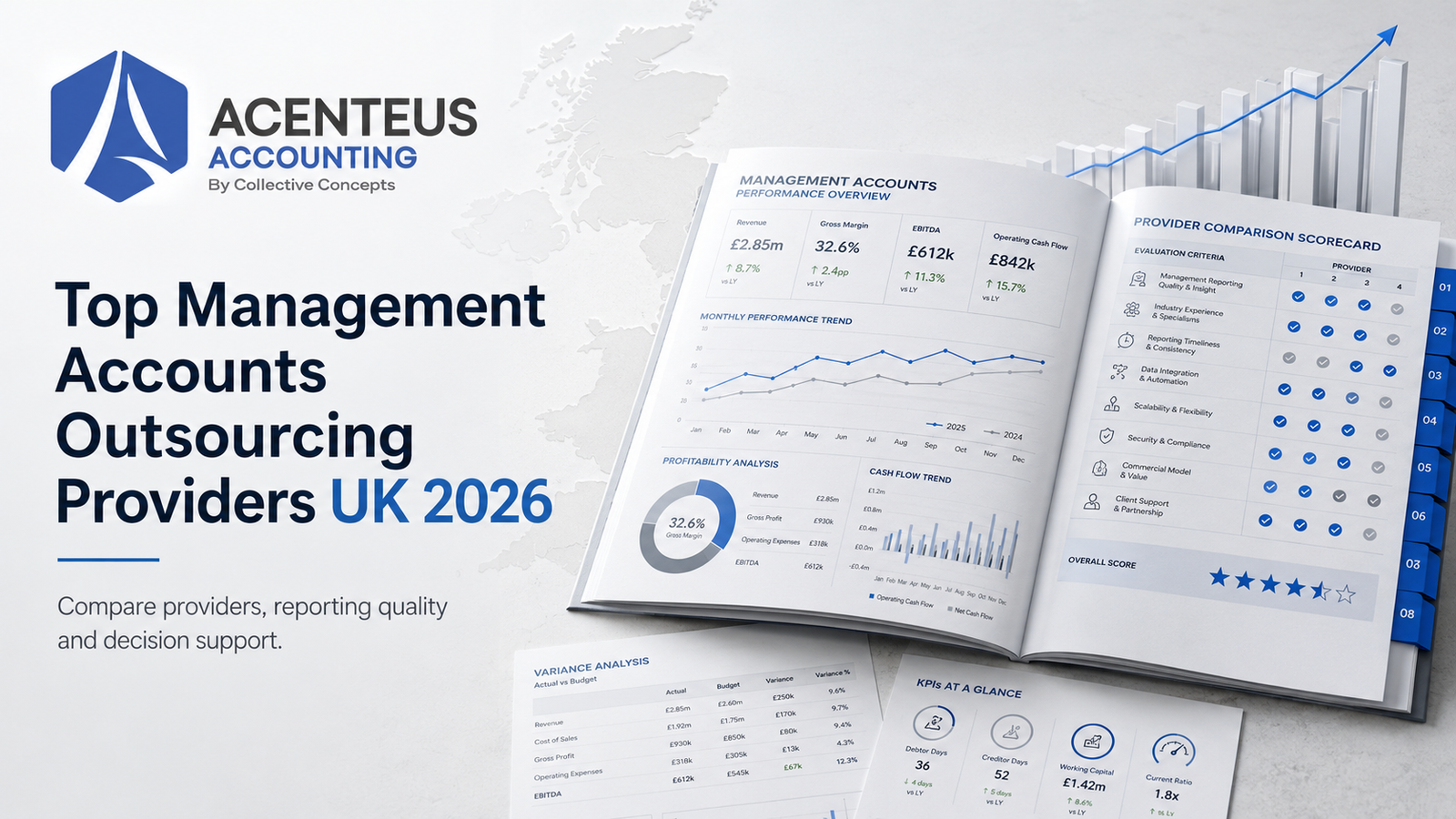
MIS reporting is distinct from management accounts, although the two are related. The ICAEW technical guidance on management accounts describes management accounts as financial information prepared for internal use, covering profit and loss, balance sheet, and cash flow. MIS reporting extends beyond financial statements to include operational metrics, client performance data, workflow capacity figures, and external market indicators. Where management accounts tell you what the numbers were, a well-designed MIS framework tells you what is driving them and what you should do about them.
For SME clients, a management information system serves a similar function at the business level. The Xero guide to management accounts notes that the value of management information is not in the volume of data produced but in its relevance to the decisions the business is facing. An MIS report for a UK SME should reflect the metrics that matter to that specific business, not a generic template applied uniformly to every client regardless of sector or stage.
MIS reporting versus management accounts: the practical distinction
Management accounts are a financial deliverable: a structured pack covering a defined period, prepared to a consistent standard, and delivered on a set schedule. MIS reporting is a broader discipline that includes the management accounts but also covers KPI tracking, trend analysis, forward-looking commentary, and in some cases scenario modelling. An SME can receive excellent management accounts and still lack a proper MIS framework if those accounts are not connected to a defined set of KPIs and a regular review conversation with their accountant.
The accounting services model for small businesses that delivers genuine advisory value in 2026 integrates both. The management accounts provide the financial foundation. The MIS layer provides the context, the metrics, and the forward-looking analysis that turns a financial report into a decision-support tool.
The KPIs Every UK Accounting Firm Should Be Tracking
Before a practice can build credible MIS reporting for its clients, it needs to be operating its own internal MIS framework effectively. Most UK accounting practices track some metrics informally, but very few have structured them into a monthly reporting cycle that informs decisions systematically. The following KPIs form the core of an effective internal MIS framework for a UK accounting firm.
Revenue and margin metrics
- Revenue per partner or director, tracked monthly against the prior year and plan
- Gross margin by service line, distinguishing between compliance, advisory, and specialist services
- Effective hourly rate per engagement type, calculated from actual time logged against fee billed
- Write-off rate as a percentage of billed time, segmented by service type and client
- Monthly recurring revenue as a percentage of total revenue, which reflects the stability of the client base
Capacity and workflow metrics
The talent and capacity pressures that UK practices have faced over the past three years make capacity metrics essential rather than optional. The core capacity KPIs are:
- Chargeable hours as a percentage of available hours, by team member and by service line
- Work in progress (WIP) balance and average WIP age, which together reveal where bottlenecks are forming
- Turnaround time by service type, measured from job received to job delivered
- Number of outstanding jobs past their target completion date
- Job throughput per month against capacity plan
Client metrics
Client-level metrics are the most often neglected element of the internal MIS framework, yet they carry the most decision-relevant information. The year-end workflow pressure that most practices experience is partly a capacity problem and partly a client distribution problem: too many unprofitable clients absorbing resource that should be applied to profitable ones.
- Revenue per client, ranked to identify the top 20% generating 80% of revenue
- Margin per client, calculated from delivery cost against fee billed
- Client churn rate, measured quarterly
- Average fee per client segment, tracked over time to identify fee compression
- Number of new clients won and lost each month, with source attribution
The KPIs UK Accounting Firms Should Be Reporting to SME Clients
What a UK SME needs from its accounting firm in terms of management information depends on the stage and type of the business, but there is a core set of KPIs that applies to the majority of owner-managed businesses at growth stage. The QuickBooks guide to management accounts notes that management information is most useful when it is tailored to the specific decisions a business is facing, which means the KPI framework for each client should be reviewed annually as the business evolves.
Financial KPIs
- Gross margin percentage, tracked monthly against prior year and budget
- Net profit margin, with variance commentary explaining significant movements
- Revenue by product line, service category, or customer segment where meaningful
- Monthly cash burn and cash runway in weeks, calculated from current bank balance
- Debtor days and creditor days, which together reveal the working capital position
- Payroll as a percentage of revenue, for businesses where staff costs are the primary variable cost
Operational and forward-looking KPIs
Financial KPIs describe the past. Operational KPIs describe the present and inform the future. The operational metrics most relevant to growth-stage UK SMEs include:
- Pipeline conversion rate, for service businesses and subscription models
- Customer acquisition cost and customer lifetime value, for businesses with a defined sales cycle
- Monthly recurring revenue and churn rate, for subscription-based businesses
- Stock turnover ratio and days of stock on hand, for product businesses
- Utilisation and realisation rates, for professional services firms
The MIS pack for a client should be produced at the same time as the management accounts and presented as a single coherent document, not as a separate spreadsheet attachment. The MTD-driven infrastructure that most UK businesses now have in place for quarterly digital reporting creates the data pipeline that makes monthly MIS reporting operationally feasible for accounting practices to deliver consistently.
VAT-registered clients benefit particularly from an MIS framework that connects VAT compliance reporting to the wider financial picture, since VAT liabilities and reclaims directly affect cash flow and the working capital position reported each month.
How to Build an MIS Reporting Framework From Scratch
Building an MIS reporting framework is a practice management exercise, not a technology project. The tools matter less than the process. A practice that has defined what it needs to measure, why it matters, and what decisions it should inform will produce more useful management information from a well-configured spreadsheet than a practice that has purchased sophisticated reporting software without answering those questions.
Step 1: Define the decisions the MIS needs to support
Start with the decisions, not the data. What are the three to five most important decisions the practice needs to make on a monthly basis? For most UK accounting firms, they cluster around capacity (do we have enough people?), margin (are we making money on the right clients?), and growth (are we winning the right clients and retaining them?). Once those decisions are identified, the KPIs that inform them can be selected. Every metric in the MIS framework should be traceable to at least one decision it supports. Metrics that cannot be connected to a decision should be removed.
Step 2: Map the data sources
For each KPI selected, identify the source system that holds the data: practice management software, cloud accounting platform, CRM, timesheet system, or payroll. The integration between payroll, accounting, and practice management platforms is one of the most significant operational factors in how quickly a monthly MIS pack can be produced. Practices where data lives in well-integrated systems can automate a large proportion of the data aggregation step. Practices with siloed systems will spend significant time on manual data extraction each month.
Step 3: Design the reporting template
The MIS reporting template should be consistent month to month. Changing the format between periods makes trend analysis difficult and trains the reader to focus on format rather than content. The template should open with an executive summary: two to three sentences that tell the reader what the most important findings are before they look at a single chart or table. Most practitioners skip the executive summary and produce a document that requires the reader to find the conclusions themselves. That is the single design decision most likely to reduce how much the report is actually used.
Step 4: Establish the review cadence
An MIS report that is produced but not reviewed in a structured setting will gradually be ignored. The review cadence should be built into the practice calendar before the reporting framework is launched. For internal firm MIS, a monthly partner or director review meeting structured around the MIS pack is the minimum. For client MIS reporting, the AccountingWEB analysis of advisory service delivery consistently identifies the monthly review call as the mechanism that distinguishes advisory accountants from compliance-only providers. The report alone is not the service. The conversation the report enables is the service.
Data security in MIS delivery
MIS reporting aggregates data across multiple systems. Where client data is included, the same GDPR and data security obligations that apply to all outsourced accounting work apply to MIS delivery. This is particularly relevant for practices using offshore preparation teams, where the data aggregation step involves personal and commercially sensitive client information being processed outside the UK.
The Tools UK Accounting Firms Are Using to Deliver MIS Reporting
The right tool for MIS reporting is the one that fits the practice’s existing technology stack and can produce consistent outputs without requiring significant manual assembly. Most UK practices find that MIS reporting can be delivered effectively using a combination of their existing cloud accounting platform and a dedicated reporting or dashboard tool, without the need for enterprise-level business intelligence software.
Cloud accounting platforms
Xero and QuickBooks Online both provide native reporting features that cover the financial KPI layer of an MIS framework. For practices where the client’s cloud accounting data is current and well-maintained, the native reports provide a reliable and timely data source for the monthly MIS pack. The Xero management accounts guide notes that the platform’s reporting tools are most effective when combined with a consistent chart of accounts structure across clients, which allows the practice to produce comparable outputs without custom configuration for each engagement.
Dedicated reporting and dashboard tools
Tools such as Fathom, Spotlight Reporting, and Futrli connect to Xero and QuickBooks via API and produce client-facing dashboard reports with visual formatting, KPI trending, and budget-versus-actual analysis that the native platform tools do not provide. The additional cost of these tools is modest relative to the value they add to the management accounts and MIS service, and practices that use them consistently report higher client engagement with the monthly pack than those relying on spreadsheet-based outputs.
Practice management systems
For the internal MIS framework, practice management systems such as Karbon, CCH, and Iris provide the capacity, WIP, and profitability data that underpins the firm-level KPIs. Most practice management systems can export this data to Excel or Power BI, where the MIS template can be built and updated on a monthly basis. The key is ensuring that the data extracted from the practice management system is clean and current, which requires consistent timesheet discipline and WIP write-off processes rather than a technology solution.
How Outsourcing Supports MIS Reporting at Scale
Building an MIS reporting framework is straightforward in concept. Delivering it consistently, every month, for every client in a busy practice portfolio is where most firms struggle. The data aggregation and report preparation steps are structured, repeatable tasks that consume significant time from senior practitioners who could be applying that time to the review conversation and the advisory work.
The offshore-onshore delivery model that works well for management accounts preparation applies equally to MIS reporting. The offshore team handles data extraction, template population, variance calculation, and initial draft production. The onshore accountant reviews the draft, writes or approves the narrative commentary, and delivers the final pack to the client. The onshore accountant’s time is focused on the elements of the process that require their judgement and client knowledge, rather than on data assembly.
The AccountingWEB outsourcing guide for UK accountants identifies consistency as the primary benefit of outsourced delivery for recurring monthly services: when the preparation workflow is documented to a defined standard, the output is consistent regardless of which team member executes it. For MIS reporting, where the value to the client depends on receiving the same format, the same KPIs, and the same level of analytical depth every month, this consistency is the difference between a service that is trusted and one that is tolerated.
Practices considering offshoring the MIS preparation step should review the key considerations before offshoring to ensure the data governance, software access, and workflow documentation are in place before the first offshore-prepared report is delivered to a client.
For practices managing the full accounting outsourcing lifecycle for their UK clients, the MIS preparation workflow can be embedded alongside bookkeeping, management accounts, and tax compliance delivery within the same monthly offshore workflow, reducing the marginal cost of adding MIS reporting as a service line.
Acenteus CCA supports UK accounting practices with structured offshore MIS preparation, including KPI template population, variance analysis, and management pack production, integrated with the onshore review and delivery model.
Turning MIS Reports Into Advisory Conversations
An MIS report delivered without a structured conversation attached to it is a document. An MIS report delivered with a focused fifteen-minute review call, a prepared commentary that explains the key movements, and two or three specific questions for the client to consider is an advisory engagement. The distinction matters because most of the value in an MIS reporting service lies not in the report itself but in what the report enables the accountant and the client to discuss.
What good commentary looks like
The written commentary in an MIS pack should answer three questions: what happened, why it matters, and what the client should do about it. A commentary that describes the numbers without explaining them adds limited value. A commentary that connects a gross margin contraction to a specific operational cause, explains whether it is structural or temporary, and identifies the decision the client needs to make as a result is the kind of communication that makes clients feel their accountant understands their business. The ICAEW perspective on value pricing notes that clients perceive value in professional advice when it is relevant, actionable, and timely. MIS commentary that meets all three criteria will consistently receive more client engagement than a well-formatted pack without any explanatory text.
Moving from reporting to planning
The monthly MIS review is the natural opportunity to shift the conversation from the previous period to the next quarter. A practice that uses the MIS pack as a launching point for a brief discussion about the decisions the client is facing in the next three months, the KPIs that are trending in the wrong direction, and the areas where additional analysis or planning would be useful is delivering something that a compliance-only firm cannot replicate.
This advisory layer is a natural extension of the MIS relationship rather than a separate service requiring separate engagement. As the AccountingWEB analysis of advisory delivery makes clear, the practices that win and retain growth-stage SME clients in 2026 are those that treat the monthly numbers as the beginning of the conversation rather than the end of the service.
For practices building their advisory capacity alongside the outsourcing for UK accounting firms service model, MIS reporting is one of the clearest pathways from a compliance-led relationship to a genuine advisory one. The structured monthly workflow creates the discipline. The MIS pack creates the context. The review conversation creates the value.
A Report That Does Not Drive a Decision Is Just a Document
The data that UK accounting practices and their SME clients already hold is sufficient to support far better decisions than most of them are currently making. The gap is not in the data. It is in the framework that structures that data into a repeatable, decision-focused reporting process. Building that framework does not require new technology or significant investment. It requires clarity about which decisions matter, which metrics inform them, and how the reporting output connects to a conversation that produces action.
For UK accounting firms, MIS reporting is also a practice development opportunity. The practices that can tell their clients, every month, what the numbers mean and what to do about them will retain those clients at a level that compliance-only services cannot match. The practices that deliver the same reports every month without connecting them to decisions will find those clients asking increasingly direct questions about what value they are receiving for the fee they are paying.
The investment is in structure, not in software. Define the decisions. Select the metrics. Build the template. Establish the review rhythm. The rest follows from those four steps, whether the practice delivers MIS reporting entirely in-house or through an offshore preparation and onshore review model that makes consistent monthly delivery sustainable at scale.
Frequently Asked Questions (FAQ)
Management accounts are a structured financial pack covering a defined period. MIS reporting extends beyond the financials to include operational KPIs, trend analysis, and forward-looking commentary designed to inform specific decisions rather than simply record performance.
Core KPIs include gross margin, net profit margin, debtor days, creditor days, cash runway, and revenue by category. Operational KPIs depend on the business type and should be selected based on the specific decisions the client needs to make each month.
Monthly is the standard for most growth-stage SMEs. The frequency should match the pace at which the business makes operational and financial decisions. Quarterly is adequate for very small or stable businesses with limited transaction volumes.
Xero and a well-designed Excel template are sufficient for most SME MIS reporting. Dedicated tools such as Fathom or Spotlight Reporting add value for clients wanting visual dashboards or budget-versus-actual analysis beyond what the native platform provides.
Revenue per partner, gross margin by service line, effective hourly rate, write-off rate, chargeable hours as a percentage of available hours, WIP age, client churn, and margin per client. These together give a complete operational picture of firm performance.
Yes. The data extraction, template population, and variance calculation steps are structured and repeatable, making them well suited to offshore delivery. The onshore accountant reviews the draft and produces the narrative commentary before client delivery.
A one-to-two page summary covering five to eight KPIs with a brief written commentary is more useful for most small businesses than a comprehensive report they will not read. Detail should increase with the complexity and scale of the business.
A management accounts pack is a periodic financial document covering P&L, balance sheet, and cash flow. An MIS dashboard is a visual, real-time or near-real-time view of KPIs that updates as data changes and is designed for ongoing monitoring rather than periodic review.
Lead with the executive summary and the commentary rather than the numbers. Use plain language to explain what the most significant movements mean for the business. Reserve the detailed tables for clients who want to interrogate the underlying data.
When the business is making enough operational decisions each month that historical financial data alone is insufficient. This typically coincides with rapid growth, multiple revenue streams, or the point at which the owner needs a finance function rather than just an accountant.