Last updated: 28 August 2026
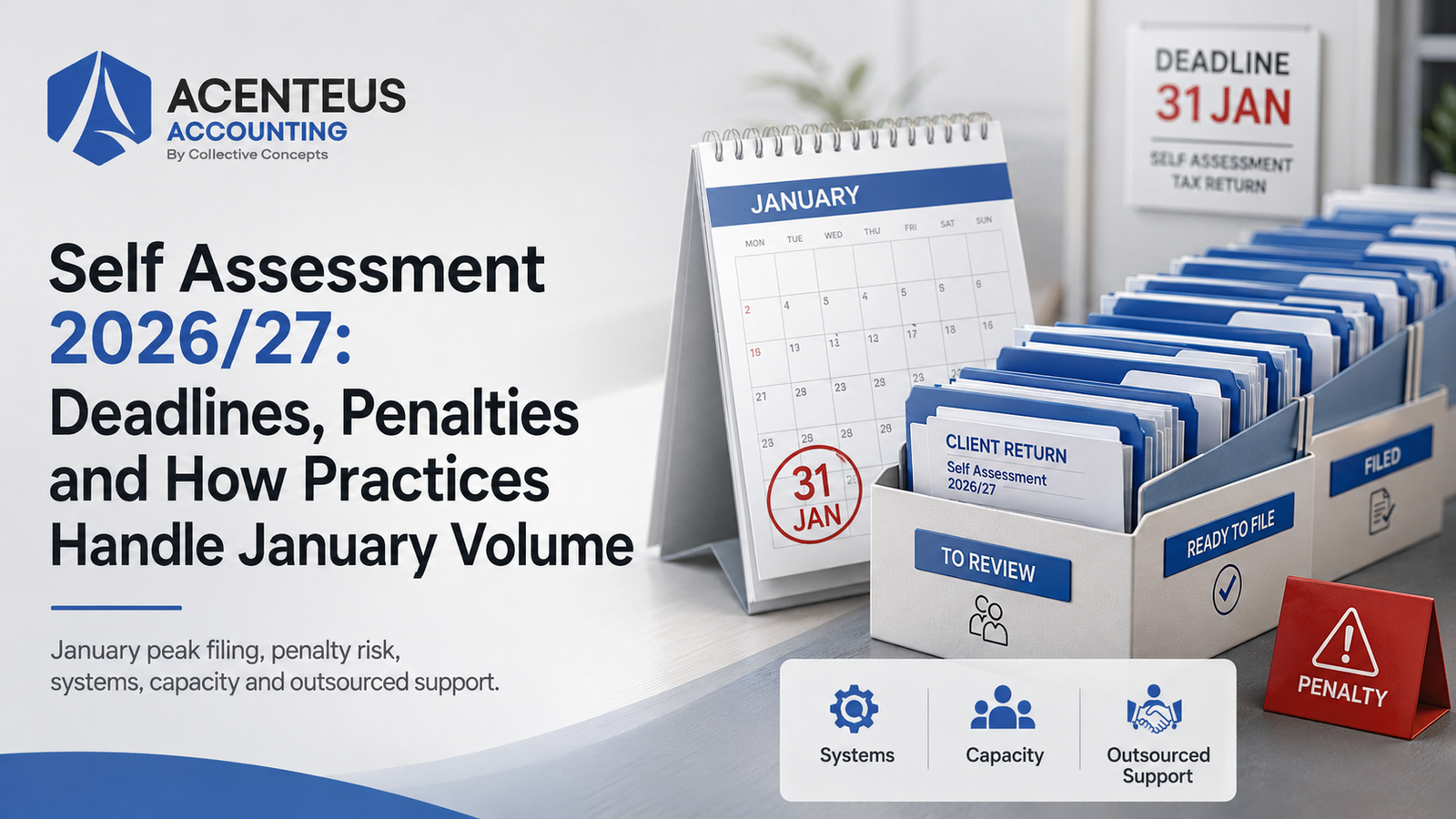
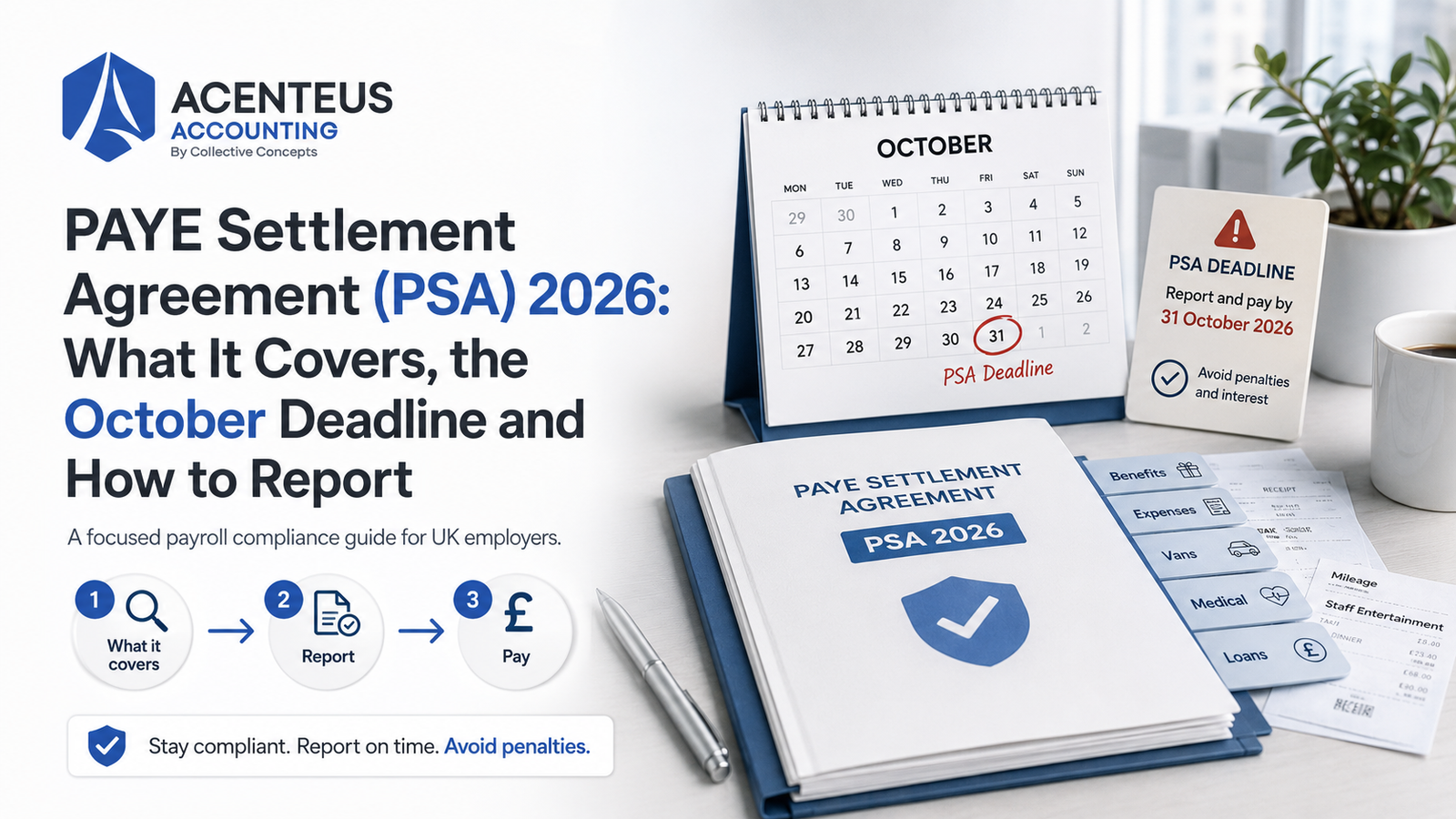
The PSA HMRC deadline that matters right now is 22 October 2026, or 19 October 2026 if you are not paying electronically. That is the date the income tax and Class 1B National Insurance under a PAYE Settlement Agreement for the 2025/26 tax year must reach HMRC. It is not the only date in the cycle, and describing it as “the October deadline” hides two things that catch employers out every year: there are two October dates depending on how you pay, and there is an earlier one on 31 July for sending HMRC the calculation itself.
A PAYE Settlement Agreement is a voluntary arrangement that lets an employer pay the tax and National Insurance on certain minor, irregular or impracticable benefits in one annual payment, so the items never reach an employee’s P11D or their tax code. The employee gets the benefit genuinely tax free. The employer picks up the bill, grossed up at the employee’s marginal rate, and that grossing up is what makes a PSA far more expensive than most people expect.
This guide covers the full 2026 cycle: what can and cannot go in a PSA, what the grossed up cost actually is at every UK and Scottish marginal rate, how to report and pay, what happens when a deadline slips, and whether a PSA is even the right answer once you have checked the exemptions. It also covers two live developments most guides have not caught up with: HMRC opened a call for evidence on PSAs that closes on 15 September 2026, and mandatory payrolling of benefits in kind, now phased from April 2027, does not do what a lot of commentary suggests it does to PSAs.
Every date, rate and rule below was checked against GOV.UK and HMRC guidance in August 2026.
Key takeaways
- Three dates, not one. Apply or amend by 5 July, send the calculation by 31 July, pay by 19 or 22 October, all following the end of the tax year the PSA covers.
- Two October dates, not one. 22 October 2026 for electronic payment, 19 October 2026 by post, for the 2025/26 tax year.
- A PSA renews itself. Since 2018/19 an agreed PSA is an enduring agreement. You only act again to amend or cancel it, though the calculation and payment are still needed every year.
- Grossing up roughly doubles the cost. A £200 benefit costs about £288 for a basic rate employee and about £442 for a Scottish top rate employee, once income tax and 15% Class 1B are added.
- There is no statutory penalty for a late calculation. There is something worse: HMRC can issue a Regulation 110 determination estimating what you owe, and you get 30 days to appeal it.
- Mandatory payrolling does not replace PSAs. Phase one from April 2027 covers cars, car fuel, vans, van fuel and medical benefits. Items inside a PSA are unaffected.
- The rules may change. HMRC published a call for evidence on how PSAs work in practice, closing at 11:59pm on 15 September 2026.
What are the PSA deadlines for 2026?
A PSA runs on a three date cycle, and all three fall after the end of the tax year the agreement covers. For the 2025/26 tax year, which ended on 5 April 2026, the dates are as follows.
| What is due | Date for 2025/26 | Date for 2026/27 | Status |
|---|---|---|---|
| Apply for a new PSA, or amend an existing one | 5 July 2026 | 5 July 2027 | Statutory. Missing it means the items cannot be in the PSA for that year |
| Send the PSA calculation to HMRC | 31 July 2026 | 31 July 2027 | Contractual in the PSA agreement, recommended by HMRC, not a statutory filing date |
| Pay income tax and Class 1B NIC electronically | 22 October 2026 | 22 October 2027 | Statutory payment date. Cleared funds must reach HMRC |
| Pay by post or cheque | 19 October 2026 | 19 October 2027 | Statutory payment date for non electronic payment |
The 5 July date is the hard one. If you did not have a PSA in place for 2025/26 and did not apply by 5 July 2026, those items cannot go into a PSA for that year at all. They have to be dealt with another way, usually a P11D or through payroll, and the window has closed.
The 31 July date is the one nobody watches, because it does not carry a penalty. HMRC’s Guidelines for Compliance, GfC1, is direct about why it exists: if you pay without submitting a calculation, HMRC cannot verify what the payment is for or whether it is correct. Once HMRC processes your calculation it issues a payslip with a charge reference, and the liability does not appear in your business tax account, so without that reference the payment can go astray.
One further point on the October dates. If you pay electronically, cleared funds must reach HMRC by 22 October. Where that date falls on a weekend or bank holiday, payment must clear on the last working day before it, not the next one. In 2026, 22 October is a Thursday, so the ordinary rule applies.
The rest of the employer reporting calendar around these dates, including P11D, Class 1A and payroll year end, sits in our UK tax year 2026/27 key dates guide and our payroll compliance guide covering P60 and P32 obligations.
What is a PAYE Settlement Agreement?
A PAYE Settlement Agreement is a statutory arrangement between an employer and HMRC under which the employer pays the income tax and Class 1B National Insurance on specified benefits and expenses, on a grossed up basis, in one annual payment.
Where an item is inside a PSA, three things stop happening. It is not processed through payroll for income tax and Class 1 NIC. It does not appear on the employee’s P11D. And no Class 1A NIC is due on it, because Class 1B replaces it.
The employee’s position is the point of the whole arrangement. Because the employer settles the tax at the employee’s marginal rate, the benefit reaches the employee completely tax free with no entry on their record and no coding adjustment the following year. That is worth real goodwill on things like a staff event or a long service award, where an unexpected tax charge lands badly.
Since the 2018/19 tax year, PSAs have operated as enduring agreements. Once agreed, the PSA continues year after year without reapplication, and you only need to act if you want to amend the items covered or either side wants to end it. That removed a genuine annual admin burden, and it also created a new risk: a PSA agreed four years ago may still be quietly covering items that no longer belong in it, and nobody has looked.
What can and cannot go into a PSA?
An item qualifies only if it is minor, irregular or impracticable. Those three words are doing precise work and HMRC applies them as a test, not as a description.
| Category | What it means | Typical items |
|---|---|---|
| Minor | Small in value. There is no fixed monetary limit | Small gifts and vouchers that fall outside the trivial benefits exemption, incentive and long service awards, non business overnight expenses above the personal incidental expenses limit |
| Irregular | Not paid at regular intervals across the tax year | Relocation costs above the £8,000 exemption, one off overseas conference costs, a spouse or partner accompanying an employee on a business trip |
| Impracticable | Difficult to value per employee or to apportion fairly between them | Staff entertaining that is not exempt, shared refreshments, a staff event where the cost per head cannot be split cleanly |
The exclusions are firm. You cannot put cash payments into a PSA: wages, bonuses, round sum allowances or anything else that is effectively pay. You cannot include high value benefits such as company cars, and you cannot include beneficial loans. The purpose of a PSA is to tidy up the awkward edges of a benefits package, not to move the package itself off payroll.
Before putting anything in a PSA, check whether it is already exempt, because a PSA on an exempt item is a voluntary donation to HMRC.
- Trivial benefits. A benefit costing £50 or less is exempt where it is not cash or a cash voucher, is not a reward for performance and is not contractual. Directors of close companies are capped at £300 of trivial benefits per tax year.
- Annual events. Staff functions are exempt up to £150 per head across the tax year. This is an exemption, not an allowance, and going a pound over makes the whole cost taxable rather than just the excess.
- Relocation. Qualifying relocation costs are exempt up to £8,000. Only the excess needs a home, and a PSA is a reasonable one.
- Personal incidental expenses. £5 a night in the UK and £10 a night overseas while staying away on business. Above that, the whole amount becomes taxable.
What does a PSA actually cost?
More than the benefit. The employer pays income tax at the employee’s marginal rate on a grossed up figure, then pays Class 1B National Insurance at 15% on the benefit value plus that tax. Grossing up means finding the pre tax amount that would leave the benefit value after tax, so a £200 benefit for a 40% taxpayer is grossed up to £333.33.
The table below works a single £200 benefit through every marginal rate in force for 2025/26 and 2026/27, with Class 1B at 15%. Figures are rounded to the nearest pound.
| Employee marginal rate | Grossed up value | Income tax | Class 1B at 15% | Total employer cost |
|---|---|---|---|---|
| rUK basic 20% | £250 | £50 | £38 | £288 |
| rUK higher 40% | £333 | £133 | £50 | £383 |
| rUK additional 45% | £364 | £164 | £55 | £418 |
| Scottish starter 19% | £247 | £47 | £37 | £284 |
| Scottish intermediate 21% | £253 | £53 | £38 | £291 |
| Scottish higher 42% | £345 | £145 | £52 | £397 |
| Scottish advanced 45% | £364 | £164 | £55 | £418 |
| Scottish top 48% | £385 | £185 | £58 | £442 |
Read the last column against the £200 you started with. A PSA costs between roughly 142% and 221% of the benefit value depending on who receives it. That is not a criticism of PSAs, it is the arithmetic of settling somebody else’s tax, but it does mean the decision to use one should be made deliberately rather than by habit.
The devolved rates are the part that trips up employers with staff across the UK. Scotland has six income tax bands and the rest of the UK has three, so you cannot run one calculation and apply it to everyone. HMRC expects separate calculations by tax jurisdiction, which in practice means up to three: one for English and Northern Irish taxpayers, one for Welsh taxpayers, who currently pay the same rates as the rest of the UK, and one for Scottish taxpayers. Getting the split wrong understates the liability on a Scottish higher rate population and overstates it on a Scottish starter rate one. Our guide to UK income tax rates for 2026/27 sets out the bands.
Class 1B is charged at the employer secondary National Insurance rate, currently 15%. It is worth being clear that Class 1B and Class 1A are the same rate, so the National Insurance cost is not what should drive the choice between a PSA and a P11D. The choice should be driven by whether the item is genuinely minor, irregular or impracticable, and by whether you want the employee to bear the tax. If you are modelling the employer National Insurance cost across your payroll more broadly, our employer National Insurance calculator and guide covers the wider position, and Employment Allowance does not reduce Class 1B.
Worked example: the staff party that costs more than the party
This is the single most common PSA scenario and the one where the numbers surprise people most, because the £150 per head figure is an exemption rather than an allowance.
Take a company with 100 employees holding one annual event at a cost of £180 per head. Eighty employees are basic rate taxpayers, twenty are higher rate, all in England. Total spend is £18,000.
Because the cost per head exceeds £150, the exemption is lost entirely and the whole £180 per head is taxable, not just the £30 above the threshold. Run that through a PSA and the calculation looks like this.
| Population | Benefit value | Grossed up | Income tax |
|---|---|---|---|
| 80 basic rate employees at £180 | £14,400 | £18,000 | £3,600 |
| 20 higher rate employees at £180 | £3,600 | £6,000 | £2,400 |
| Total | £18,000 | £24,000 | £6,000 |
Class 1B at 15% on the grossed up total of £24,000 adds £3,600. The PSA cost is therefore £9,600 on top of the £18,000 party, for a total outlay of £27,600.
Now hold the same party at £150 per head. Total spend £15,000, fully exempt, no PSA entry, no tax, no Class 1B. The extra £3,000 of party spend cost £9,600 in tax. Every pound above £150 per head is bought at roughly four pounds of total cost.
That is the calculation to put in front of a client before the venue is booked, not after. It is also why the £150 figure should be tracked as a hard budget line across the whole tax year rather than checked once in December, because the exemption covers all annual functions combined, not each one separately.
How do you report and pay a PSA?
Six steps, in order, and the sequencing matters because the payment reference does not exist until HMRC has processed the calculation.
- Step 1. Confirm the PSA is in place and covers the right items. If it is an enduring agreement from a previous year, read what it actually says. Items added informally are not covered, and items that have become regular may no longer qualify.
- Step 2. Identify every item and split it by tax jurisdiction. Build the population lists for English and Northern Irish, Welsh and Scottish taxpayers using payroll tax codes. An S prefix identifies a Scottish taxpayer and a C prefix a Welsh one.
- Step 3. Gross up at each marginal rate. Within each jurisdiction, split by band. This is where most errors occur, and HMRC compliance activity focuses on exactly this point.
- Step 4. Add Class 1B at 15% on the total of the benefit values plus the income tax due.
- Step 5. Submit the calculation to HMRC by 31 July. HMRC’s preferred method is the PSA1 form, and submitting online is the fastest route. You must send a calculation even if it shows nothing is due for the year.
- Step 6. Pay by 22 October using the charge reference on the payslip HMRC issues. Do not wait for the payslip if it is slow to arrive, because the payment deadline does not move, but do quote the correct reference when you pay.
Keep the evidence. Records to retain include the PSA contract itself, invoices for the goods or services, dates of provision, lists of recipients, and payroll records showing tax codes, since those are what evidence the marginal rates you used. Six years is the sensible retention period.
What happens if you miss a PSA deadline?
The consequences differ sharply depending on which deadline slips, and the pattern is counterintuitive: the deadline with no penalty attached is the one that can cost the most.
| Deadline missed | Consequence |
|---|---|
| 5 July application | The items cannot be covered by a PSA for that tax year. They must go on a P11D or through payroll instead, with the tax falling on the employee |
| 31 July calculation | No statutory penalty. HMRC can technically revoke the PSA. In practice the greater risk is a Regulation 110 determination once the payment date passes |
| 19 or 22 October payment | Late payment interest from the day after the due date, plus late payment penalties on PAYE amounts unpaid at 30 days, 6 months and 12 months |
| Both calculation and payment | HMRC estimates the liability itself and issues a determination. You have 30 days to appeal it |
The Regulation 110 determination is the mechanism worth understanding, because it inverts the usual position. Under Regulation 110 of the Income Tax (PAYE) Regulations 2003, HMRC can issue its own estimate of the income tax and Class 1B due where an employer has not met its PSA obligations. That estimate is HMRC’s best judgement, it can be higher than the real figure, and the burden then sits with the employer to displace it within 30 days.
HMRC has been actively raising these. Its own Agent Update issue 130 confirmed it was raising determinations for employers who failed to meet their PSA obligations, and set out the legislative basis. So the absence of a statutory late filing penalty is not the reassurance it looks like. Submitting a calculation, even a nil one, is what stops HMRC estimating on your behalf.
Does mandatory payrolling of benefits kill the PSA?
No, and a lot of current commentary implies otherwise. The two regimes address different things and the payrolling changes do not touch items inside a PSA.
Here is the current position, which has moved twice. Mandatory payrolling of benefits in kind was originally set for April 2026, was delayed to April 2027, and in June 2026 HMRC confirmed a phased rollout rather than a single switchover.
| Phase | From | What it covers |
|---|---|---|
| Phase 1 | 6 April 2027 | Company cars, car fuel, vans, van fuel and employer provided medical benefits. Reported and taxed in real time through payroll |
| Phase 2 | 6 April 2028 (intended) | Most remaining benefits in kind. Detail still to be confirmed |
| Excluded for now | No date | Beneficial loans and employer provided living accommodation. These remain on P11D or voluntary payrolling |
| PSA items | Unaffected | Benefits settled through a PSA continue to be settled through a PSA |
None of the phase one benefits could go in a PSA anyway, because company cars are explicitly excluded as high value benefits. So the immediate overlap between the two regimes is close to zero.
The honest longer term reading is different, though, and worth saying out loud rather than pretending nothing changes. As phase two brings most remaining benefits into real time payroll, the population of items that are genuinely awkward enough to need a PSA gets smaller. What is left is the hard core: shared staff entertaining, items that cannot be attributed to an individual, and one off costs nobody wants to put in an employee’s tax code. PSAs will keep doing that job. They will just do less of it.
Practices should be planning the payroll systems work for phase one now rather than in 2027, and our note on cloud based payroll outsourcing for accountancy practices covers how firms are structuring the capacity for it. If you are weighing whether to build that capacity internally or buy it, the comparison of payroll outsourcing providers for UK firms and our breakdown of payroll outsourcing costs cover both sides. On software readiness specifically, the comparison of payroll bureau software for UK practices is the place to start.
What could change: HMRC’s call for evidence
On 23 June 2026 HMRC published a call for evidence on PAYE Settlement Agreements, which closes at 11:59pm on 15 September 2026. It seeks views on how PSAs work in practice: how employers decide what to include, how the minor, irregular and impracticable tests are applied, and whether the rules are clear, consistent and fair.
HMRC has been careful to frame this as evidence gathering rather than reform. The document states that it is not about changing how benefits and expenses are taxed and introduces no new tax. That is a fair description of a call for evidence, and it would be wrong to tell clients that PSA rules are changing. Nothing has been announced.
It would be equally wrong to ignore it. HMRC does not open a call for evidence on a regime it considers settled, and the questions being asked, particularly around how employers apply the three tests and how they run the calculations, are the questions you would ask before tightening criteria or changing the process. The ATT has covered the consultation in detail, noting HMRC’s interest in whether an employer’s sector influences what they put in a PSA.
The practical point for a practice: if you have a view on how the minor, irregular and impracticable tests work in the real world, the window to say so closes on 15 September 2026. If you do not, at least review your clients’ PSA contents this autumn on the assumption that the criteria may be applied more tightly in future.
Should you use a PSA at all?
Work down this list in order. A PSA is the fourth option, not the first, and treating it as a default is how employers end up paying two hundred percent of a benefit’s value for no reason.
- First, is it exempt? Trivial benefits at £50 or less, annual events at £150 per head or less, relocation to £8,000, personal incidental expenses within the nightly limits. An exempt item costs nothing. This is the cheapest tax planning available to any employer and it is routinely skipped.
- Second, can it be restructured to become exempt? Bringing a party to £150 per head, or splitting a single £75 gift into eligible trivial benefits, changes the tax outcome entirely. This is legitimate and it is the highest value conversation you can have with a client on this topic.
- Third, should it just go through payroll or on a P11D? If the item can be attributed cleanly to an individual and the employee bearing the tax is acceptable, ordinary reporting is simpler and cheaper for the employer.
- Fourth, does it meet the minor, irregular or impracticable test and do you want the employee to receive it tax free? Only if both are true does a PSA earn its place.
Two cases where a PSA is clearly right. Shared staff entertaining that genuinely cannot be apportioned, because there is no honest way to put a number on an individual’s P11D. And any situation where an unexpected tax charge on a goodwill gesture would do more damage than the cost of settling it, which is most long service awards and most staff events.
One case where it is clearly wrong. A benefit that started as irregular and has quietly become annual is no longer irregular, and leaving it in an enduring PSA because nobody reviewed the contract is a compliance exposure rather than an administrative saving.
What do employers get wrong most often?
Six errors account for most of the cost and most of the correspondence.
Treating £150 per head as an allowance. It is an exemption. Go one pound over and the entire cost per head becomes taxable, not the excess. This single misunderstanding is worth thousands of pounds on a large workforce.
Using one marginal rate for the whole workforce. Separate calculations are needed by tax jurisdiction and by band. A single blended rate is not acceptable and it is exactly what HMRC looks at.
Assuming an enduring PSA covers whatever you put in it. The agreement lists specific items. Anything not on the list is not covered, however minor it feels.
Paying without submitting a calculation. HMRC cannot allocate or verify the payment, and the absence of a calculation is what triggers a determination.
Putting exempt items into the PSA. A trivial benefit inside a PSA is a benefit you have chosen to pay tax on unnecessarily. Check the exemption first, every time.
Forgetting the nil calculation. Where a PSA is in place and no items arose, HMRC still expects a calculation showing nil. Silence looks like non compliance.
Getting the October payment right
A PSA is a small piece of compliance with a disproportionate ability to go wrong, mostly because the cycle runs across three dates in three different months and the one with no penalty attached is the one that triggers HMRC estimating your bill for you.
If you are an employer, the immediate action is to confirm three things: that your PSA contract actually lists the items you have been treating as covered, that your calculation is with HMRC or on its way, and that the payment is scheduled to clear by 22 October 2026. If any client entertaining ran above the exemption limits this year, run the grossed up number now rather than in October. Employers who would rather hand the whole payroll and benefits cycle over can see how that works in our bookkeeping and payroll service.
If you run a practice, the higher value work is upstream. Reviewing enduring PSA contracts, checking exemptions before items reach the calculation, and modelling the cost of a staff event before it is booked are all conversations worth more to the client than the compliance filing itself, and they are the ones that get squeezed out when the team is at capacity. The trade offs are the same ones we set out in the peak season capacity playbook.
Acenteus Accounting provides white label payroll and employment tax support for UK accountancy practices, including PSA calculations, P11D preparation and payroll year end, alongside tax compliance outsourcing and accounting outsourcing for accountants. If the October cycle is competing with everything else on your desk, talk to our team. Bring the actual constraint rather than a brief, and if we are not the right fit we will say so.
Frequently Asked Questions (FAQ)
For the 2025/26 tax year, payment of the income tax and Class 1B National Insurance is due by 22 October 2026 if paying electronically, or 19 October 2026 if not. The deadline to apply for or amend a PSA was 5 July 2026, and HMRC asks for the calculation by 31 July 2026.
No. Since the 2018/19 tax year, an agreed PSA is an enduring agreement that continues automatically. You only need to contact HMRC to amend the items covered or to cancel it. The annual calculation and payment are still required every year.
Class 1B is employer only National Insurance payable on items settled through a PSA. It is charged on the total value of the benefits plus the income tax the employer pays under the agreement. The rate is 15%, the same as the employer secondary rate and the same as Class 1A.
There is no statutory penalty for a late calculation. The risk is different: HMRC can issue a Regulation 110 determination estimating the tax and Class 1B it believes is due, which may be higher than the true figure. The employer then has 30 days to appeal. Late payment of the liability does attract interest and PAYE late payment penalties.
Items that are minor, irregular or impracticable to apportion. Common examples are staff entertaining above the £150 per head exemption, small gifts and vouchers outside the trivial benefits rules, long service and incentive awards, relocation costs above £8,000, and shared costs that cannot be allocated to individuals.
Cash payments including wages, bonuses and round sum allowances, high value benefits such as company cars, and beneficial loans. Regular benefits that are provided routinely also fail the test, because they are neither irregular nor minor in the sense HMRC applies.
You calculate the pre tax amount that would leave the benefit value after tax at the employee’s marginal rate. For a £200 benefit given to a 40% taxpayer, the grossed up figure is £333.33 and the income tax is £133.33. Class 1B at 15% is then charged on the grossed up total.
Yes. Scotland has six income tax bands against three in the rest of the UK, so a separate calculation is needed for Scottish taxpayers. In practice up to three calculations may be required, covering English and Northern Irish taxpayers, Welsh taxpayers and Scottish taxpayers. Payroll tax codes identify which applies, with an S prefix for Scotland and a C prefix for Wales.
No. It is an exemption, not an allowance. If the cost per head across all annual functions in the tax year exceeds £150, the whole amount becomes taxable, not just the part above £150. This is the most expensive misunderstanding in this area.
Not in the near term. Mandatory payrolling begins in phases from 6 April 2027, covering company cars, car fuel, vans, van fuel and employer provided medical benefits, with most remaining benefits intended to follow from April 2028. None of the phase one items could be included in a PSA anyway, and benefits settled under a PSA are unaffected.
Yes. Where a PSA is in place, HMRC expects a calculation each year even if it shows that no income tax or National Insurance is due. Submitting a nil calculation is what prevents HMRC estimating a liability on your behalf.
Nothing has been announced. HMRC published a call for evidence on PAYE Settlement Agreements that closes on 15 September 2026, seeking views on how the regime works in practice. HMRC states explicitly that it is not about changing how benefits are taxed and introduces no new tax, but the questions asked suggest the criteria and process could be reviewed in future.